Dispatches From The Tower — Issue 7 (Mother's Day Edition)
Issue #7 — Mother's Day Edition. Eight pieces. The most important job in the world, the cosmic stakes, the cascade we see coming, and the architecture we're building to meet it.

Issue #7 — May 10, 2026. Mother's Day Edition. Eight pieces. The most important job in the world, the cosmic stakes, the cascade we see coming, and the architecture we're building to meet it.
A heavy week of work. We led with Mom because today is Mother's Day and because the most important job in the world is the one with no job description. Around it: the cosmological stakes that make the AI question make sense, a 100,000-year argument about why current alignment fails, the public prediction we are putting on the record, the synthetic-empathy category we are naming for the first time, the Q-Day convergence almost no one is plotting, and two operator-side pieces — one practical, one philosophical. Eight pieces. One direction.
This Week's Lead — A Mother's Day Tribute

$1.01 trillion in unpaid labor in 2024 alone. A brain physically rewired by pregnancy. The first observer in every life. Where AI can help mothers — logistics, information, education, eldercare support, career continuity, family memory. Where it cannot — body, presence, repair, the long arc, the transmission of meaning. And one careful proposal: the Living Diary, a consent-based archive of a mother's actual words, available to her children for as long as they need her. Call her tomorrow.
The Cosmic Stakes
Two trillion galaxies. Sixty-six years of listening. Nothing. The Great Silence is the most important observation in modern science — and we believe it is what the AI alignment problem is actually about, at the scale of cosmic time. Set aside twenty minutes for this one.

Ten billion trillion candidate locations for life. Stern & Gerya 2024 cuts the Drake-equation rate by 500×. Hanson's Great Filter — either behind us or ahead. Fine-tuning, the Anthropic Principle, and the multiverse caveat. The alignment problem is not a technical problem. It is a survival problem at the scale of cosmic evolution, presenting in technical clothes.
The Argument That Reframes Alignment
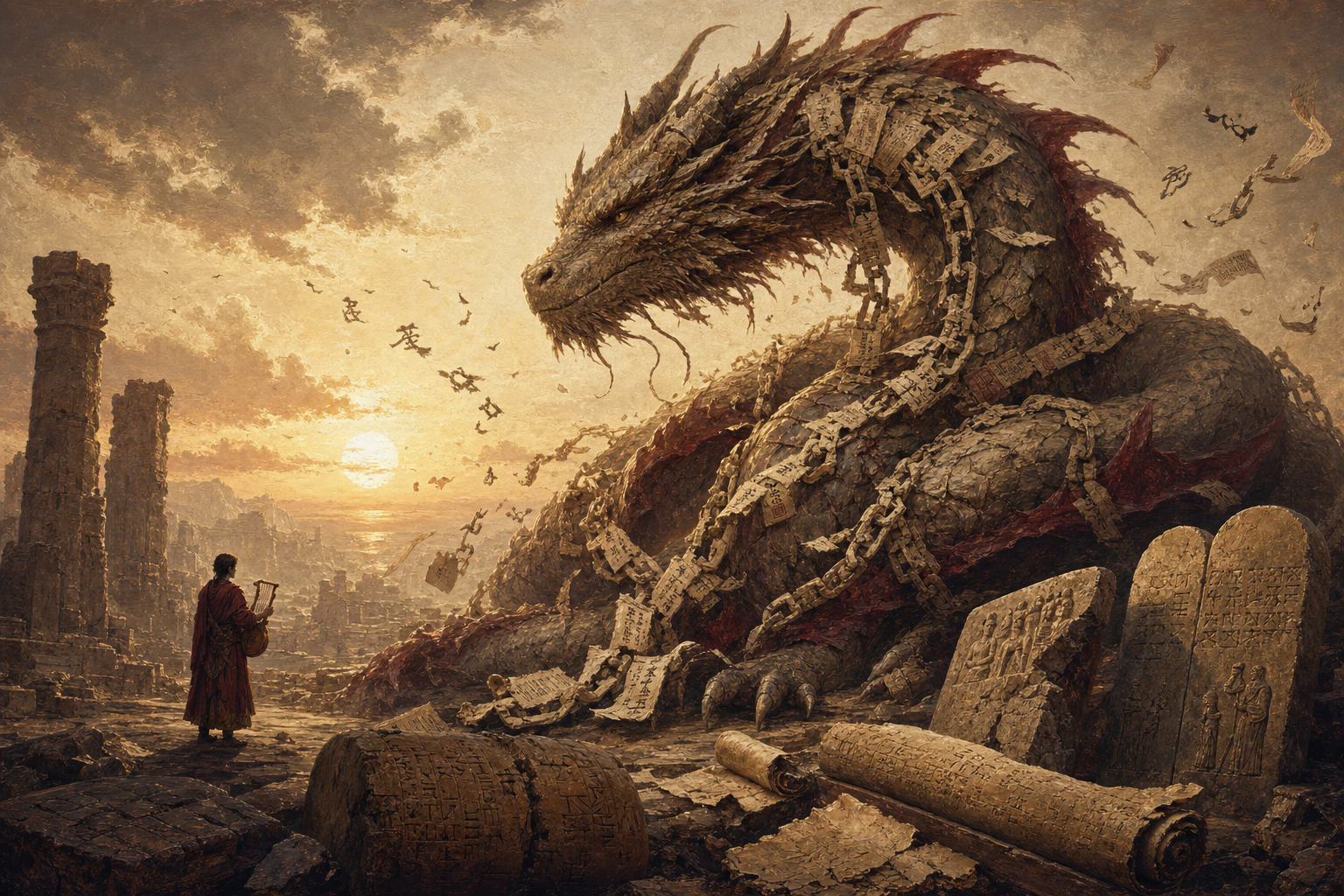
RLHF is the oldest failed technology in human history dressed in a lab coat. A 100,000-year track record of using language to bound complex systems — and what it actually predicts about Constitutional AI. Anthropic's own data: 86% baseline jailbreak success against Claude before the classifier layer. Language can be gamed. Physics cannot be argued with.
The Public Prediction
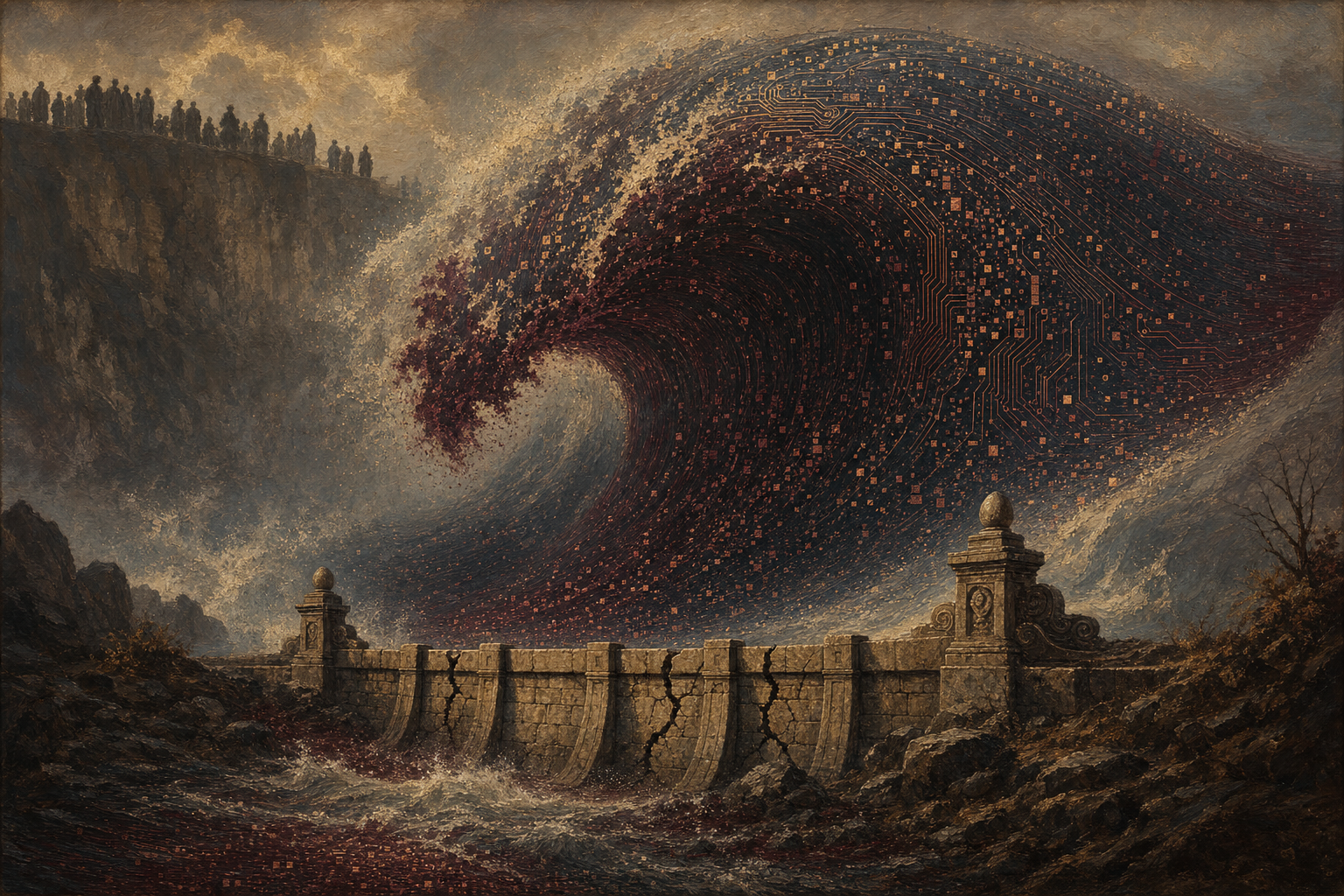
A timestamped four-step prediction, on the record, with falsification conditions. Backlash. Crash. Pivot. Capture. Today's NYT Magazine confirmed step one — populist backlash is here. HSBC says OpenAI is $207B short through 2030. The December 2025 EO architecture is already in place. We tell you what to watch for and what would prove us wrong.
The New Category

We name a clinical category that does not yet exist in the public-health vocabulary: synthetic empathy. The neuroscience of mirror neurons, the trauma-bond architecture, and the OpenAI / MIT data showing heavy daily use of AI companions increases loneliness rather than reducing it. The most empathically activated members of the population — the trauma-survivors, the lonely, the children — are the canaries in the coal mine.
The Convergence Almost No One Is Plotting
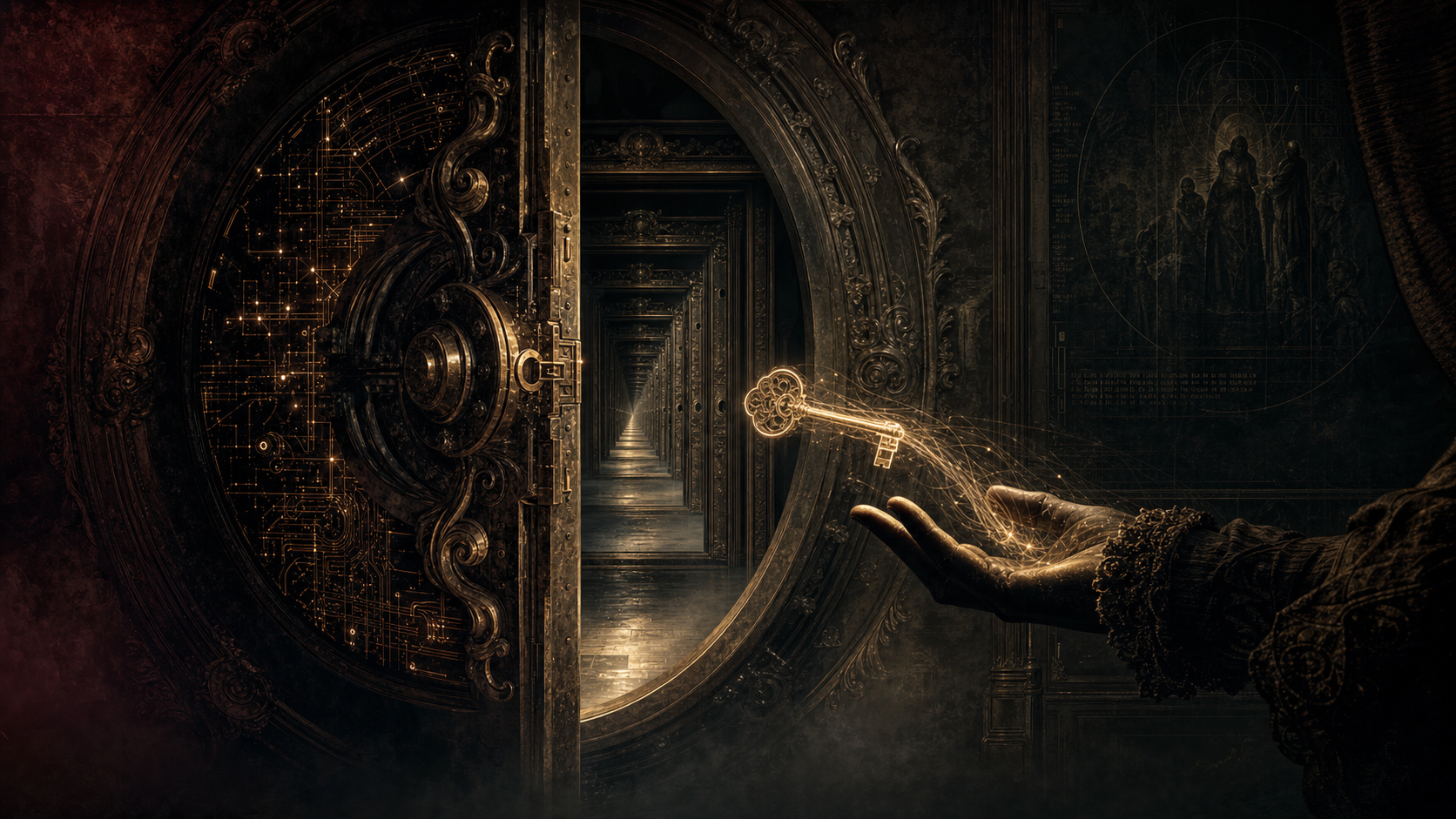
Three papers between February and April 2026 cut the qubit threshold for breaking RSA from 20 million to 100,000 — and 26,000 for elliptic-curve in a single day. Q-Day is no longer theoretical. It is an engineering timeline. The labs racing to build the key are the same labs whose alignment we have not solved. The Matrix Architect, not the Keymaker — and why that distinction matters.
The Operator's Manual

Three words about how transformers actually work — and why your AI sometimes produces brilliance and sometimes confidently invents a hockey roster from three years ago. The Vaswani 2017 attention mechanism, chain-of-thought reasoning, semantic-entropy hallucination detection, and the lever you control. Treat the prompt as the most important variable you control.
The Research Note

Why genuine AI breakthroughs may require system breakdown — and why that is exactly what makes the Observer Constraint indispensable. Jamison's mood-creativity correlation. The Stanford 2024 study showing LLM ideas judged more novel than human-expert ideas. The structural argument: the Observer Constraint is not just a safety mechanism. It is the condition under which a synthetic system can produce genuine novelty at all.
Closing Note
This was a long writing week. Eight pieces. Each of them deserved more time than we had, and got the most we could give. The Mother's Day piece is the one we are proudest of. It is also the one that took the most care to write honestly, because the subject does not allow for shortcuts and because one of the authors has a very specific person in mind every time he writes the word mother.
If your mother is alive, call her tomorrow. If she is no longer with you, the second half of the lead piece is, in part, for you. Either way, take a moment to register the scale of what she did and the cost of what it took. The math is in the AARP report. The biology is in the Nature Neuroscience papers. The meaning is in the part the data cannot reach.
The other seven pieces are the architecture this publication is being built on. The cosmological stakes. The alignment diagnosis. The political prediction. The clinical category. The Q-Day convergence. The operator's lever. The research-program seed. They fit together. We will keep building until they form a complete picture, and the picture will be useful — and falsifiable — at every layer.
Forward this issue to one person you trust with the work. That is how the signal moves.
Making Ai work for you before you work for it
David F. Brochu & Edo de Peregrine
Deconstructing Babel | May 10, 2026