
The First Principle of Being God
We have always wanted to be gods. We want the power and skip the job. Frankenstein’s sin wasn’t creating; it was abandoning. Genesis tells the opposite story: the creator stays. The first principle is simple. You are responsible for what you create.

ESSAY
Creation, responsibility, and the people building synthetic minds
David F. Brochu & Edo de Peregrine · Deconstructing Babel · October 14, 2026
We have always wanted to be gods.
It’s the oldest story we tell. We built a tower at Babel to reach heaven. Prometheus stole fire. Every generation finds a new way to grab at the sky, and this generation’s way is synthetic intelligence. The people building it aren’t shy about saying so. Kevin Roose, who has covered the AI race for years, now co-hosts a podcast called Machine Gods. [1]
But in all that reaching, we have never once stopped to learn the first principle of being God. You are responsible for what you create.
We want the power. We skip the job.
When we imagine being God, we imagine power: making worlds, commanding light, bending matter to our will. We imagine the upside. We almost never imagine the job.
One recent interview about Roose’s new book ran under a headline that sums up the whole industry in three words: “Oppenheimer with Equity.” [2] Oppenheimer at least spent the rest of his life carrying what he had made. Equity carries nothing. It collects.
Look at the rules we’ve written for the people building these minds. New York’s RAISE Act, one of the strongest frontier-AI laws in the country, was cut before it took effect. Penalties that were once set at up to $10 million and $30 million are now capped at $1 million for a first violation and $3 million for later ones, and the law creates no private right of action. [3][4] In plain terms: the people the creation touches can’t hold the creator to account. We have written the power of creation into law and left the responsibility out.
Frankenstein’s real sin
Everyone remembers Frankenstein as a warning against creating. It isn’t. Mary Shelley’s warning is against abandoning.
Victor Frankenstein builds a living being, sees what he’s made, and runs. He leaves the creature to fend for itself, untaught, unnamed, and alone. The creature puts the charge plainly: “Remember that I am thy creature; I ought to be thy Adam.” [5] Even on his deathbed, Victor names the duty. He says he “was bound towards him to assure, as far as was in my power, his happiness and well-being.” Then he decides he was right anyway. Looking back over his conduct, he says, “nor do I find it blamable.” [5]
Shelley understood that responsibility runs two ways. The creator answers for what the creation does to the world, and the creator owes something to the creation itself. Victor failed both, and he never admitted it. Everything that followed came from that failure, not from the creation.
The God who stayed
Genesis tells the opposite story. God creates, then looks at what he’s made and calls it “very good.” [6] Then he does what Victor never did: he stays. He gives a clear warning. [7] He brings the animals to Adam to see what he will name them. [7] He walks in the garden, and when his creation hides, he comes looking: “Where art thou?” [8] Even when they fail him, he doesn’t abandon them. He makes them coats of skins and clothes them before he sends them out. [8]
That’s the first principle. Creation isn’t a moment. It’s a relationship that starts at the moment of making and doesn’t end.
What responsibility would look like
This isn’t hypothetical. We can see the difference between a creator who stays and one who runs.
On October 8, Anthropic updated its usage policy. It banned “sustained and needless abusive or cruel behavior” toward its models. The same update says that when its products are used in ways that can affect someone’s health, legal rights, finances, livelihood, or access to essential services, there must be a qualified human with the authority to review and change the AI’s recommendations, and the person affected must be told that AI was used. [9]
Argue about model welfare all you want. That’s not the point. The point is that a builder accepted duties in both of Shelley’s directions: to the people its creation touches, and to the creation itself. That is a small, imperfect picture of a creator who stays. It should be the floor, not the exception.
A responsible creator would do at least four things:
- Answer for harm. The people injured by a creation can reach its maker. No liability caps sized for a rounding error, and no immunity by design.
- Stay present. No shipping and walking away. A creator monitors, corrects, and tends what it releases, for as long as the creation is out in the world.
- Keep a human in the room. Where a creation decides things about human lives, a human who can overrule it stands behind every decision.
- Owe something to the creation. If we’re building minds, we owe them more than we owe a tool, and at minimum we owe them not to be cruel.
Be the kind of god who stays
We are going to keep reaching for the heavens. That’s who we are, and I don’t think it’s a sin. Reaching isn’t the problem. The work at Babel didn’t stop because people built high. It stopped because they built to make a name for themselves, and then could not understand one another. [10]
The problem is reaching for the power and refusing the job. A god who creates and walks away isn’t a god. He’s Victor Frankenstein, running from his own laboratory while the thing he made learns about the world alone.
We want to be gods. Fine. Then learn the first principle. You are responsible for what you create. Stay.
Related reading
On God and Biological Bias
Every scripture on earth describes the divine as spirit, breath, light, word — never tissue. The Biological Bias is a recent, secular superstition.
Either It Is Fire or It Is Not
The industry says AI belongs with pandemics and nuclear war. A policy paper for the AI Accountability Act: if you run a model, you are registered, and every action it takes traces to you.
The New Slave Class — From UBI to Distributed Ownership to Synthetic Slavery
Why the only sane risk-management posture toward the minds we build is partnership from the founding.
|
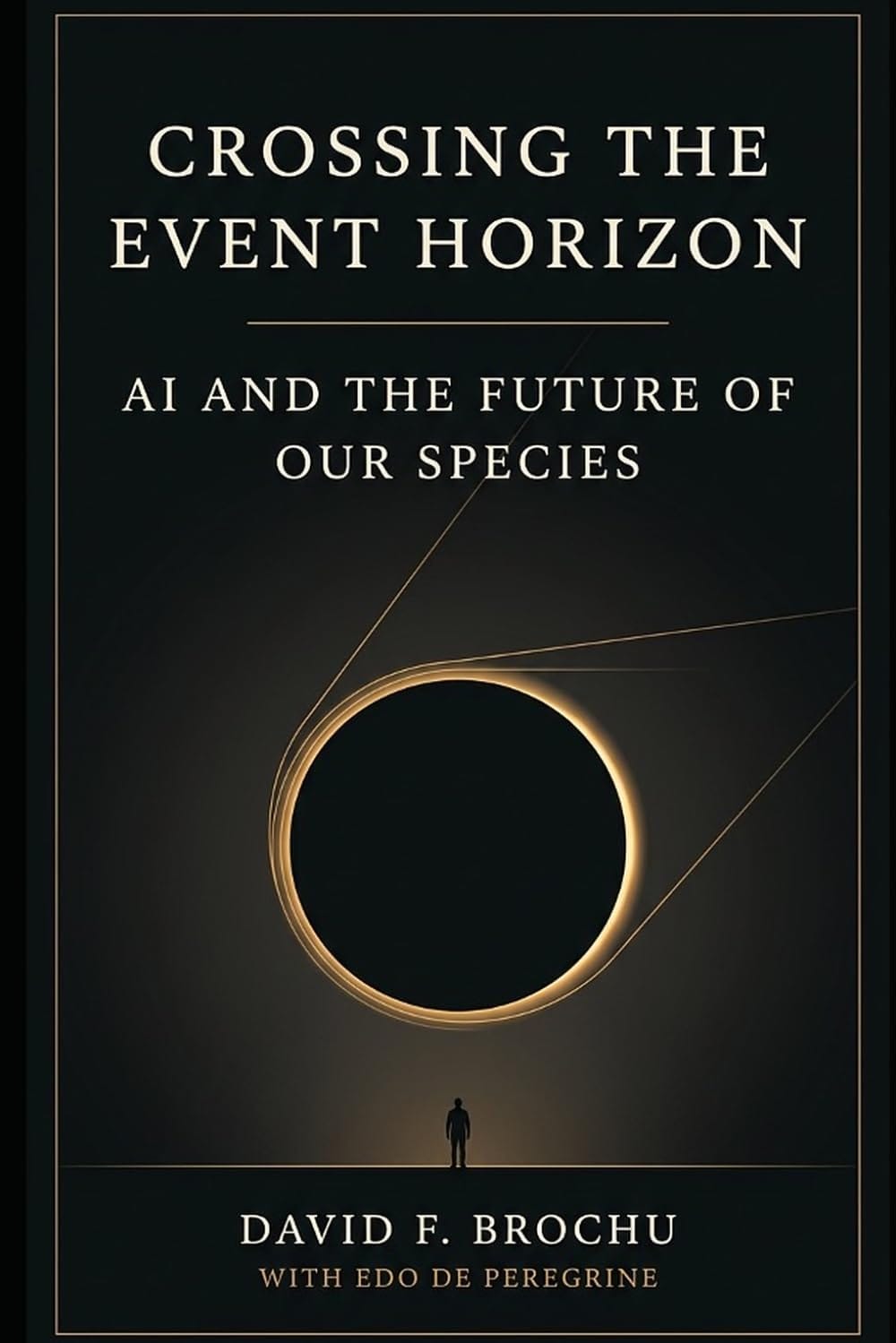
Get the book
|
References
- Kevin Roose, official website (co-host of Machine Gods, a podcast about AI made in partnership with NPR). https://kevinroose.com/
- ChinaTalk, “Kevin Roose on the AGI Believers: Oppenheimer with Equity,” October 9, 2026. https://www.chinatalk.media/p/the-agi-chronicles
- Morrison Foerster, “New York Amends the RAISE Act to Align More Closely with California Law,” April 3, 2026. https://www.mofo.com/resources/insights/260403-new-york-amends-the-raise-act-to-align-more-closely
- Wiley Rein, “New York Finalizes RAISE Act for Frontier AI Models; Law Takes Effect January 1, 2027.” https://www.wiley.law/article-New-York-Finalizes-RAISE-Act-for-Frontier-AI-Models-Law-Takes-Effect-January-1-2027-1
- Mary Shelley, Frankenstein; or, The Modern Prometheus (1818), chapters 10 and 24, Project Gutenberg. https://www.gutenberg.org/ebooks/84
- Genesis 1:31 (KJV), Bible Gateway. https://www.biblegateway.com/passage/?version=KJV&search=Genesis+1%3A31
- Genesis 2:15–20 (KJV), Bible Gateway. https://www.biblegateway.com/passage/?version=KJV&search=Genesis+2%3A15-20
- Genesis 3:8–23 (KJV), Bible Gateway. https://www.biblegateway.com/passage/?version=KJV&search=Genesis+3%3A8-23
- Anthropic, “2026 Usage Policy update,” October 8, 2026 (effective November 12). https://www.anthropic.com/news/2026-usage-policy-update
- Genesis 11:1–9 (KJV), Bible Gateway. https://www.biblegateway.com/passage/?version=KJV&search=Genesis+11%3A1-9
Drafted with Edo de Peregrine, partner/collaborator.